
When something inside us responds
On Resonance, Body Awareness, and the Subtle Signals Within Us…
Sometimes I walk out of a seminar and don't feel like I "know more" now.
Rather, it's that somewhere inside me, a whole lot of little doors have opened.
That's how it was after the "Melody of the Molecules" seminar with Boyd Truman.
It was all about molecules, frequencies, sound, light, water, essential oils, the nervous system, the heart, hormones, connective tissue—and at some point, it also came down to the question of how much of what happens inside us we actually perceive consciously.
A lot of input.
And yes: some of that has definitely been on my mind. 😉
But I found what was underneath even more exciting.
The question:
What if our bodies perceive and respond to much more than we realize in our daily lives?
We are not machines
One thought that kept coming to mind throughout the afternoon was particularly fascinating to me:
Our body is not a mechanical system made up of separate parts.
Heart. Nervous system. Hormones. Blood. Intestines. Connective tissue. Brain.
Everything communicates with everything else.
That actually sounds obvious—and yet we often treat our bodies quite differently.
If something isn't working somewhere, we take a close look at it.
Sometimes, though, the more interesting question might be:
What's happening throughout the entire system right now?
Our nervous system responds to safety and stress. Hormones carry information. Blood supplies our cells. The enteric nervous system connects the gut and the brain. Connective tissue runs throughout our entire body and connects structures to one another.
And all of these systems don't just respond to what we eat, drink, or do physically.
They also respond to our environment.
Under load.
Here's to peace and quiet.
To relationships.
On thoughts and emotions.
I found that fascinating.
Not in the sense of, “Think positively, and everything will be fine.”
Life isn't that simple.
But perhaps we sometimes underestimate how much our inner state is also experienced physically.
On Frequencies, Sound, and Resonance
Another part of the seminar focused on frequencies and sound.
Music is, ultimately, vibration.
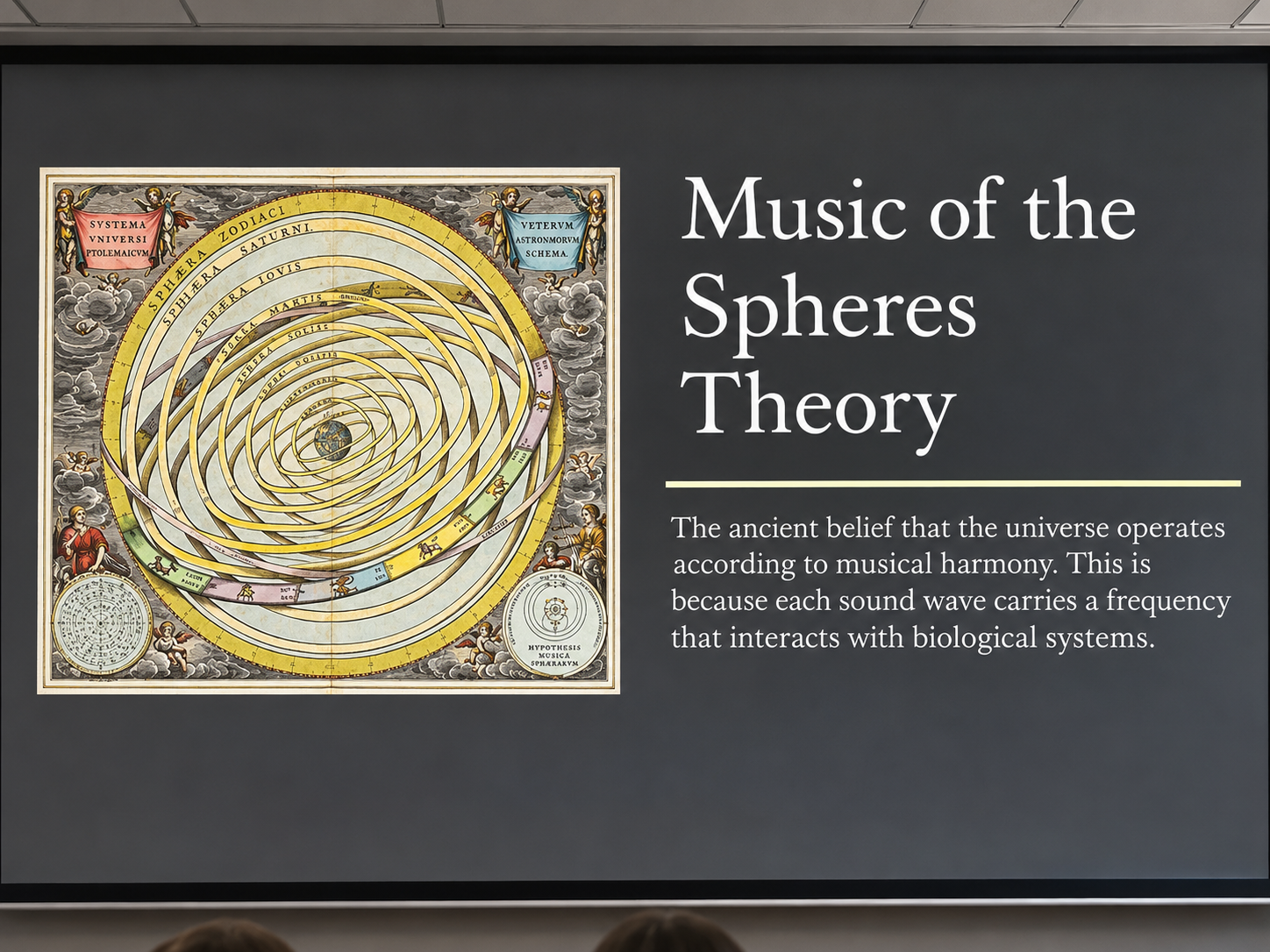
A sound has a frequency. Light, too, can be described in terms of wavelengths. And as early as Kepler’s time, he and other thinkers were already exploring the idea of a kind of “music of the spheres”—an order in which different movements and rhythms are interrelated.
That made me think of resonance.
We know them from music:
Something begins to vibrate because something else has been struck.
And suddenly, the idea didn't seem so abstract anymore.
After all, that's exactly what we experience all the time.
A person walks into a room—and something changes.
A single sentence is spoken—and we feel a sense of inner expansiveness.
Or narrowly.
A song starts playing—and within seconds, we’re transported to another moment in our lives.
A smell.
One voice.
A glance.
Sometimes, it seems, all it takes is the right tone—and something inside us responds.
Perhaps that is where science, perception, and my work as a coach intersect for me.
Not because we can explain every reaction right away.
But rather because perception is, first and foremost, a form of information.
And then there were the essential oils
Of course, that afternoon was also specifically about essential oils.
To understand their chemical composition, the different molecules they contain, and how their components are analyzed—for example, using a chromatogram, which can be interpreted as a kind of chemical fingerprint of an oil.
I found that fascinating, if only because it takes essential oils beyond the realm of “they just smell nice.”
They contain natural plant substances and complex chemical compounds.
Exactly how individual ingredients affect the human body and what therapeutic conclusions can be drawn from this is, of course, a scientific question in its own right.
What was on my mind much more that day, however, was something else:
A plant constantly responds to its environment.
To the light.
Water.
Temperature.
Injuries.
Pests.
Seasons.
And in the process, it forms highly complex substances.
Maybe that's exactly why the plant world fascinates me so much.
Not as a magic solution for everything.
Rather, as a reminder of how intelligently living systems are organized.
The body remembers
The topic of connective tissue also really stuck with me.
It connects muscles, bones, organs, and nerves, thereby forming, in a sense, a network that spans the entire body.
During the seminar, a thought came up that really struck a chord with me:
That physical structures cannot be viewed in isolation from our experiences.
I'm very familiar with this from coaching, though on a different level.
We may have understood something a long time ago—and yet our bodies still react.
The mind says:
Everything's fine.
And the shoulders rise.
My stomach is tightening.
Her breathing became shallower.
Or we meet someone and don't really know anything about them yet—and yet we immediately feel:
I can relax here.
Or:
Something doesn't seem right to me here.
Maybe "body awareness" is sometimes exactly that:
an answer before the mind has found an explanation for it.
From the Nervous System to the Heart
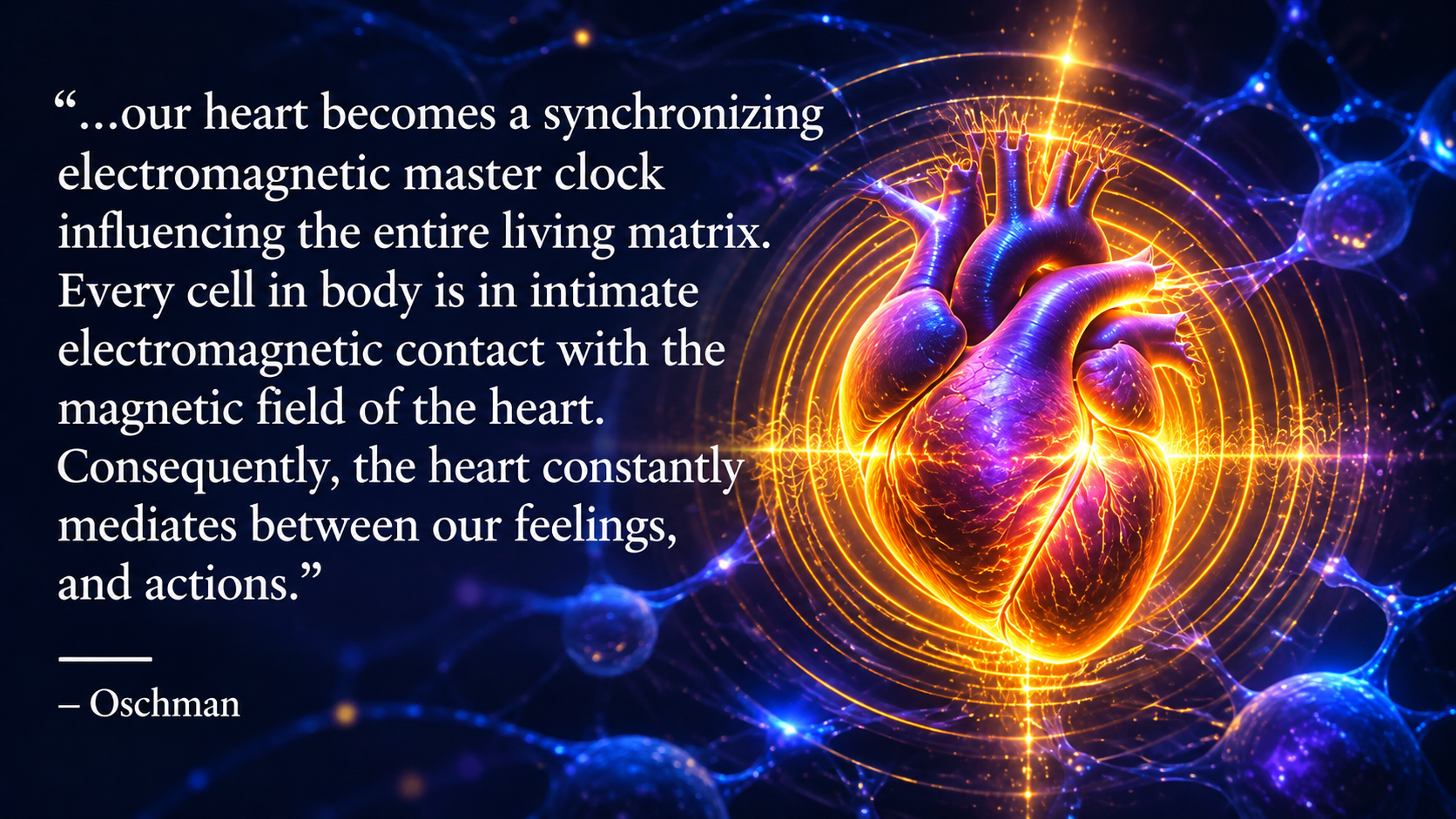
And at some point, this line of thought led away from individual molecules, hormones, or bodily functions—and toward the heart.
Not in the romantic sense.
Rather, it concerns the question of what role it actually plays in our experience, our perception, and our decisions.
That's exactly when things got really exciting for me.
Because I have this
"I don't know—but something inside me is reacting."
know well.
Sometimes it's just a thought.
Sometimes it's just a feeling.
Sometimes something contracts—or suddenly expands.
And maybe we don't always need to know why right away.
Perhaps we can start by noticing that something within us is responding.
Head or heart?
I like my mind.
Really. 😉
He's an excellent analyst.
In some cases, even things I hadn't asked him to analyze at all.
But I also know those moments when my mind comes up with twenty arguments—and yet something inside me has known all along:
No.
Or:
Yes.
Or:
Take a closer look at that.
For me, “following your heart” doesn’t mean turning off your mind.
It actually means:
to get them to talk to each other again.
What do I know?
What am I feeling?
What do I perceive?
What is my body telling me?
And what actually aligns with my values?
That last question, in particular, is crucial to me.
Because not every fear is intuition.
Not every spontaneous reaction is the truth.
Sometimes past experiences resurface.
Old injuries.
Or a nervous system that has learned very quickly to protect us.
That's why, for me, it's not about blindly following every inner impulse.
Rather, it's about learning to distinguish between things more carefully again.
Perhaps personal responsibility begins right there
One sentence from the seminar also stuck with me:
We are helping to write the story of our lives.
Not because we could control everything.
We can't.
And I also don't think much of the idea that people somehow "create" every difficult event in their lives themselves.
But we have the power to influence how we deal with whatever comes our way.
The thoughts we keep feeding over and over again.
The relationships we maintain.
Where we draw the line.
What we put our bodies through.
When we pause.
When we listen to ourselves.
And perhaps that is exactly what personal responsibility is:
Not the illusion of complete control.
Rather, it is the willingness to take our own influence seriously in those areas where we actually have it.
What I'm taking away from this day
Maybe it's not even one big insight.
More like a lot of small ones.
That life is incredibly complex.
The fact that our bodies aren't made up of individual compartments.
The nervous system, emotions, the body, and perception are more closely interconnected than we often realize in our daily lives.
That sound and music can stir something within us before we have the words to describe it.
That plants are fascinatingly complex chemical systems.
And that maybe sometimes we should analyze things a little less—and listen a little more.
The body.
To the heart.
Our perception.
Not everything we perceive is automatically true.
But it can be an invitation to take a closer look.
And maybe that's exactly what I'll take away as my greatest takeaway from this incredibly enriching day:
When something inside me responds, I don't have to know why right away.
I'd like to hear it first.
And then I'll decide what to do with it.